Where the Breakdown Happens
Most storage systems fail in small, consistent ways:
packaging that is not resealable
lids that close without sealing
containers that prioritize access over containment
These are not obvious failures. They accumulate over time, reducing quality and increasing exposure.
What Airtight Actually Means
An airtight container does not just close. It seals.
This typically involves:
gasket-lined lids
locking mechanisms that apply pressure
rigid walls that maintain structure over time
The goal is not just storage, but isolation. Air, moisture, and scent are kept out—or in—depending on the contents.
Why Containment Changes Behavior
When food is properly sealed:
freshness lasts longer
odors do not spread
access becomes intentional, not passive
This reduces the number of small decisions and corrections required throughout the day. There is less need to check, adjust, or replace.
Where It Has the Most Impact
Airtight containers are most effective in:
kitchens with frequent dry good use
open shelving where exposure is constant
shared spaces where food is accessed often
They are not about organization alone. They stabilize how food exists in the environment.
Home
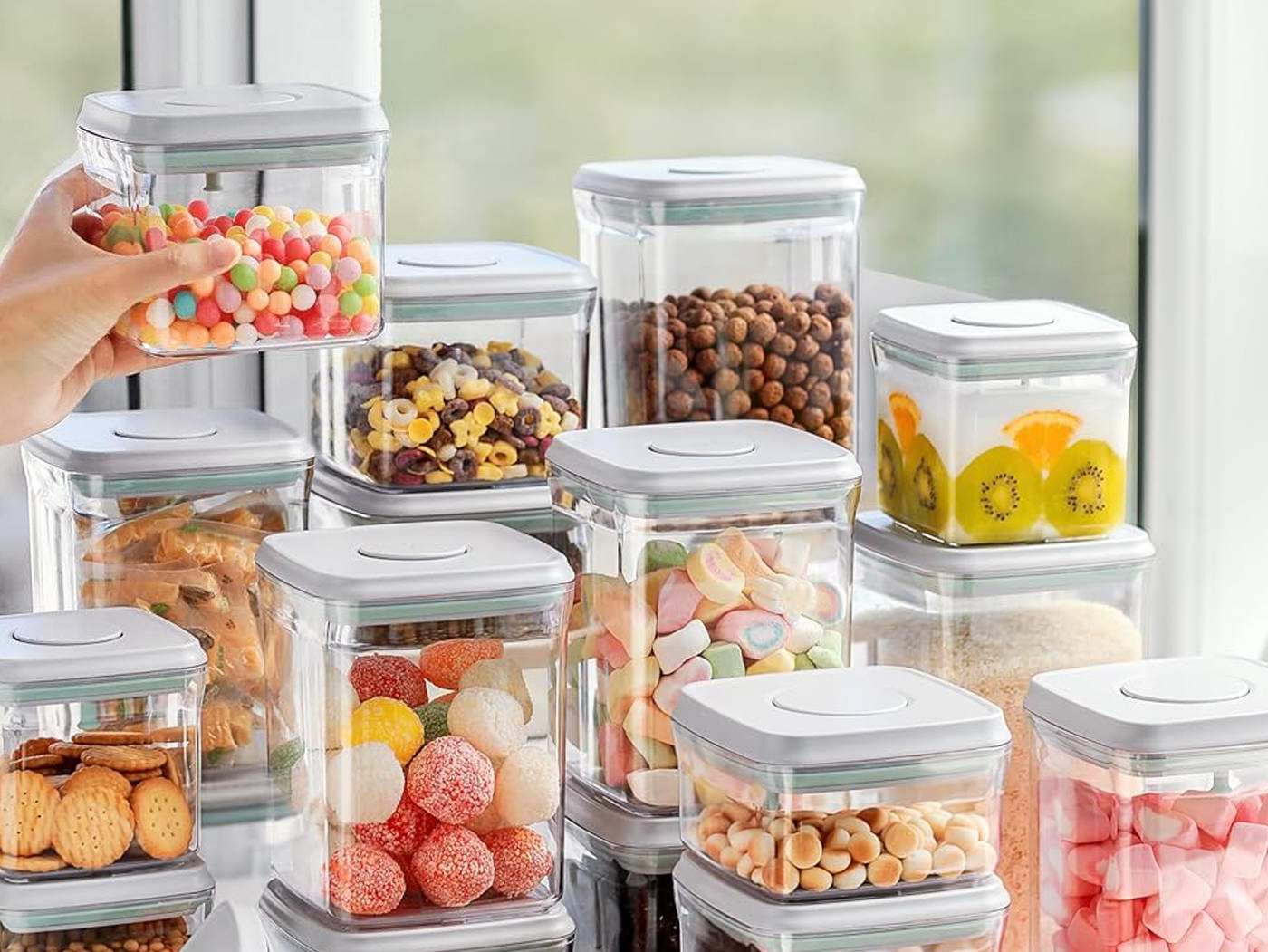
OXO Good Grips Pop Container
A rigid container with a gasket-sealed lid and locking mechanism. Designed to maintain freshness, reduce exposure, and create consistent storage conditions for everyday use.
Practical Questions
Do airtight containers make food harder to access?
They add a small step, but access becomes more deliberate. This tradeoff improves consistency and reduces repeated adjustments.
Are they necessary for all dry goods?
Not always. They are most useful for items used frequently or affected by air and moisture.
Do they replace original packaging?
Yes. Their function depends on creating a complete seal, which standard packaging does not provide.
Closing Insight
The goal is not to store food more carefully. It is to remove the conditions that cause it to degrade.