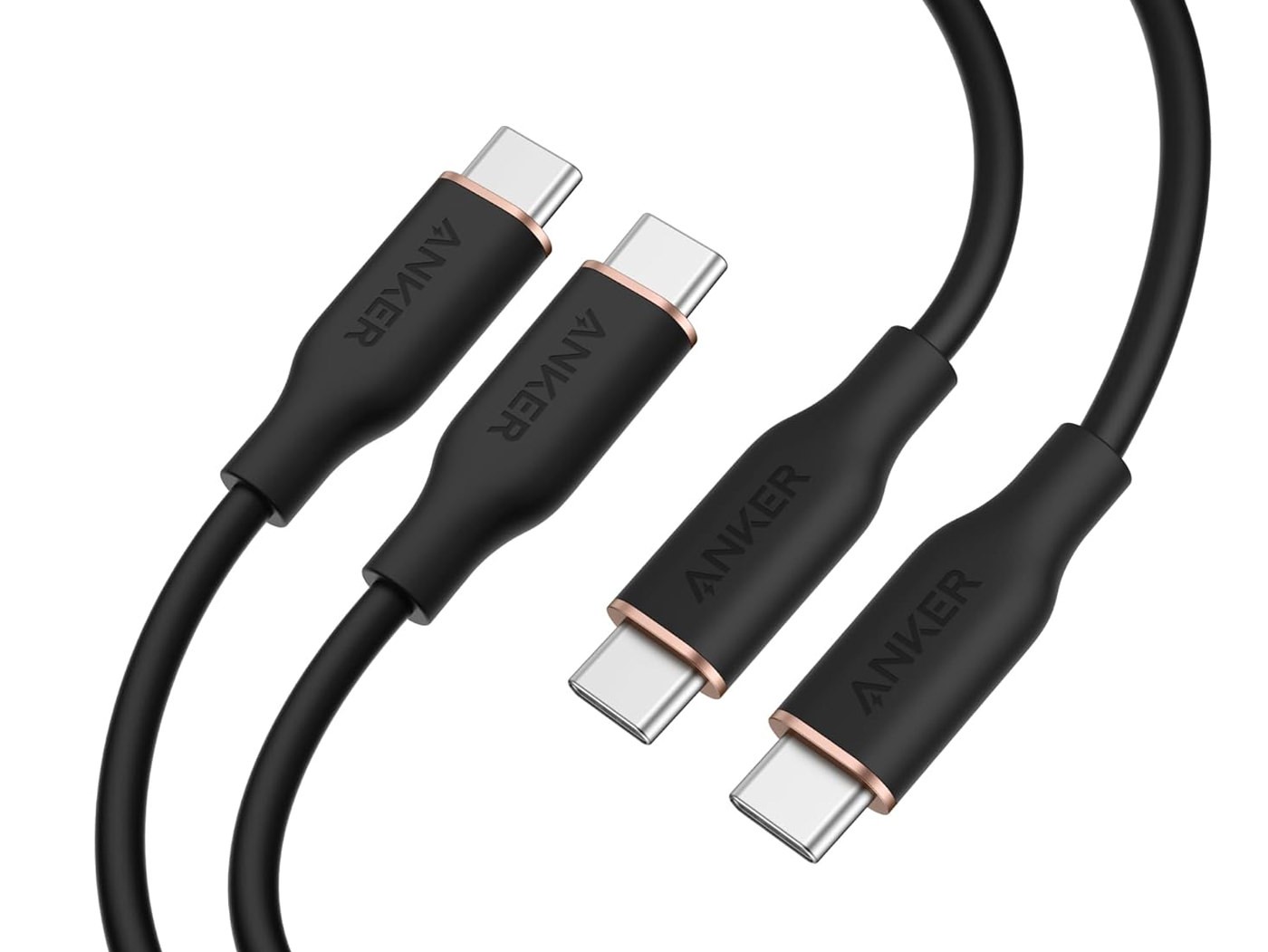
Where Most Cables Break
Almost every cable failure happens at one of two points:
The connector joint (where the cable meets the plug)
Internal wire fatigue from repeated bending
When you plug and unplug a device daily, you create micro-stress at the connector. If that stress is not distributed properly, the outer jacket cracks, internal shielding weakens, and wires eventually snap.
The cable itself is rarely the problem. The transition point is.
Material Matters More Than Thickness
Many cables signal durability through thickness. Thicker does not always mean stronger. In some cases, it increases stiffness, which concentrates stress at the connector.
More important than bulk is:
Flexibility – The cable should bend easily without holding shape.
Strain relief design – A gradual transition between plug and cable reduces stress concentration.
Outer jacket material – Silicone and high-quality braided sheathing distribute movement more evenly than rigid plastic coatings.
A cable that bends naturally tends to last longer than one that resists movement.
Daily
Silicone USB-C Cable
Soft, flexible cables reduce daily friction in small but persistent ways. They do not tangle, resist memory coil, or fight placement. Plugging in and unplugging becomes a non-event, which is exactly the goal.
Why Silicone Cables Age Better
Silicone jackets have a few structural advantages:
They remain flexible over time.
They resist cracking under repeated bending.
They are less prone to permanent kinks.
Traditional PVC cables often stiffen as they age. As flexibility decreases, stress becomes localized, accelerating failure.
Silicone cables also tend to coil naturally. This reduces internal torque when stored in bags or drawers, limiting slow structural fatigue.
Connector Construction Is Often Overlooked
Even a flexible cable can fail if the connector housing is poorly designed.
Look for:
Reinforced or extended strain relief
Slightly tapered transitions from plug to cable
Solid-feeling connector shells (not hollow or lightweight)
Durability depends less on how the cable looks in a product photo and more on how it manages tension at that small junction point.
Charging Speed vs. Build Quality
Consumers often prioritize wattage ratings and data transfer speeds. While performance specs matter, they do not predict lifespan.
A high-speed cable with weak strain relief will fail faster than a moderate-speed cable built with better materials.
Durability is mechanical first, electrical second.
How to Extend the Life of Any Cable
Even well-built cables benefit from small behavior adjustments:
Avoid pulling the cable out by the cord; grip the connector.
Let the cable bend in wide curves instead of sharp angles.
Store loosely coiled rather than tightly wrapped.
Avoid constant tension while plugged in.
Cables fail from repetition, not singular events. Reducing repeated stress extends lifespan significantly.
Why This Matters
Charging cables are handled daily and often unconsciously. When they fail, the disruption feels small but frequent — unreliable charging, device anxiety, unnecessary replacements.
Choosing a cable built around flexibility and stress distribution reduces those interruptions. The result is not noticeable performance improvement. It is the absence of annoyance.
Durability, in this case, is quiet consistency.